
YES-27-A-08: From Forecast Skill to Agricultural Decisions: Can Machine Learning Seasonal Forecasts Reduce Crop–Climate Risk?
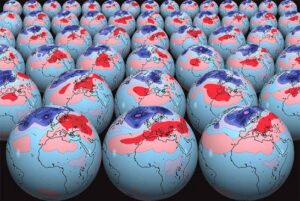
Climate services are a crucial part of how farmers make decisions around the world. Smallholder farmers base important livelihood decisions on weather and climate forecasts, for example, which crop variety to plant. The current record breaking El Nino event is expected to have devastating impacts on agricultural production in many vulnerable regions, making the demand for sub-seasonal to seasonal climate forecasts more pressing than ever. Machine Learning algorithms have led to advances in weather forecasting but have yet to meaningfully increase skill at sub-seasonal to seasonal timescales.
In the last few years, new ML algorithms have shown promise for predictions of key modes of climate variability that affect global agricultural production, such as the El Nino Southern Oscillation (ENSO) [Zhou et al, 2023]. In tandem, the development of new hybrid ML approaches [Kent et al, 2025] provides an opportunity to run larger ensembles of seasonal climate forecasts than was possible previously. These developments raise the question; how can ML forecasts best be combined with existing physics-based models to produce the most robust agricultural information for farmers?
The first part of this PhD will evaluate the strengths and weaknesses of the new ML models, focusing on their ability to predict key modes of seasonal variability for important agricultural regions around the world. In this first part, the student will look at performance in a variety of agricultural systems, for example, major breadbasket regions influenced by ENSO.
The second part of this PhD will focus on exploring how best to blend ML seasonal forecasts with current operational systems [https://www.metoffice.gov.uk/blog/2025/what-does-a-blend-of-ai-and-physics-mean-for-weather-and-climate-modelling]. For example, an active ENSO increases the skill of current seasonal forecasts providing a window of opportunity [Mariotti et al, 2020] to make more confident forecasts that can be used by agricultural decision makers. This PhD will explore the potential for ML and blended seasonal forecasts to expand these windows of opportunity.
Since the underlying models are very different, this is an area where much research remains to be done. ML models can generate far larger ensembles than physical models, but members may be less independent. How we weight such inputs in a multi-member ensemble is an open question. We will need to improve our understanding of model reliability and performance at extremes, as well as addressing some of the core challenges associated with estimating performance under distributional shift.
The third part of the PhD will take the understanding derived from the first two parts to explore the extent to which blending ML and physics based seasonal forecasts can enhance early warning systems and increase the resilience of food systems. In this last part, the PhD will explore whether the additional information provided by ML models at seasonal timescales adds value to agricultural decision making. This could be directly through improved skill or extended lead time, or indirectly as inputs to downstream impact models.
The successful candidate will have the opportunity to work closely with the Met Office with co-supervisor Dr Edward Pope whose work focuses on applications of climate information for decision-making and will have the opportunity to interact with regional climate centres through existing collaborations in the supervisory team.
This project would be suitable for a student with a mathematical background (e.g. computer science, maths, statistics, physics, meteorology etc) who enjoys statistics and is looking to further their knowledge of AI/ML and its application in climate science. During the PhD, you will have opportunity to attend courses on AI/ML and statistics. The training you receive will equip you to work in data science, climate tech or research after completion of the PhD.
References
Kent, C., Scaife, A.A., Dunstone, N.J., Smith, D., Hardiman, S.C., Dunstan, T. and Watt-Meyer, O., 2025. Skilful global seasonal predictions from a machine learning weather model trained on reanalysis data. npj Climate and Atmospheric Science, 8(1), p.314.
Mariotti, A., Baggett, C., Barnes, E.A., Becker, E., Butler, A., Collins, D.C., Dirmeyer, P.A., Ferranti, L., Johnson, N.C., Jones, J. and Kirtman, B.P., 2020. Windows of opportunity for skillful forecasts subseasonal to seasonal and beyond. Bulletin of the American Meteorological Society, 101(5), pp.E608-E625.
Zhou, L. and Zhang, R.H., 2023. A self-attention–based neural network for three-dimensional multivariate modeling and its skillful ENSO predictions. Science Advances, 9(10), p.eadf2827.