
YES-27-A-04: Assessing systemic climate risk with novel human-AI workflows
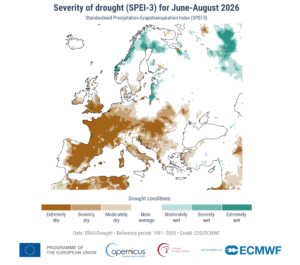
Climate is changing more rapidly than predicted and the interconnected nature of the risks it poses has emerged as an urgent societal issue. Climate risk is inseparable from the socio-ecological systems that deliver food, clean water, energy and health. Whilst the intuition of many scientists and practitioners is that the resulting systemic risks pose significant threats, the methods to assess them are at an early stage of development. The issue is urgent: there are clear signs that hidden climate risks are creating a false sense of security across food supply chains and investment portfolios, and climate extremes are become more frequent and strong (see image below).
Methods for assessing systemic risk necessarily rely on approaches focused on narrowly-defined risks, such as those to a particular location or sector. Various approaches are possible, leading to a a rapidly-expanding field of literature. The Land, Nature, and Food chapter of the latest CCRA reviewed nearly 500 publications, all from the five years leading up to the report, however, systemic risk was not a quantifiable part of the assessment. The consensus among experts in Climate Change Risk Assessments (CCRAs) is that assessment of systemic risk is an urgent need. This studentship will directly address this challenge by exploring the significant potential of human-AI workflows in risk assessment. A key part of this will be understanding underlying, and often hidden, biases exhibited by both humans and AI. Possible approaches include the use of ensembles of Ais, rather than relying on one single model.
This studentship will give you the opportunity to be at the centre of developing new methods with direct practical applicability. The supervisory team includes the UK Met Office who work extensively on climate risk and senior academics at Leeds who together have contributed to all four UK Climate Change Risk Assessments (e.g. CCRA3 Chapter 7), which are produced every seven years. The project is strongly informed by conversations with the UK Climate Change Committee, who are responsible for producing CCRAs.
Understanding interconnected climate risks across sectors and borders means moving beyond siloed risk-assessment communities and disciplinary perspectives. It also means making the most of the ever-increasing, though far from comprehensive, evidence base on climate risk. Two key underpinning questions emerge: i. how can successive CCRA reports build on historical risk evidence whilst incorporating the latest findings?; ii. how might AI be robustly used in this process? iii. The studentship will:
- Develop new approaches to climate risk assessment, with a particular focus on systemic risks, resilience, and responsible and robust human-AI workflows.
- Use food systems as an initial case study, while aiming to generate broader methodological insights relevant across sectors.
- Inform future UK Climate Change Risk Assessments, particularly CCRA5.
- Engage with both the CCC and the Met Office, for example through extended visits and remote meetings – thus ensuring policy relevance by strengthening links between research and decision-making.
Research questions will be refined by the student, based on the following:
- What is the current status of the role of AI in information and knowledge generation across sectors, with emphasis on climate risk assessment? – literature review to narrow down some human-AI workflows for the rest of the project
- What are the similarities and differences between an existing CCRA chapter and chapters that are generated through human-AI workflows?
- What are the similarities and differences between expert elicitation assessments of systemic climate risks and those resulting from human-AI workflows?
- How does the framing of systemic climate risk affect the likely policy uptake of results? For example, whilst the action-based framing of the Well-Adapted UK report lends itself to policy targets, shifting focus from climate risk alone towards food-system resilience and adaptation opportunities may help with uptake.
- Under which conditions are new climate simulations and impact modelling genuinely needed for a risk assessment? ie when is existing evidence is sufficient for decision making?