
YES-27-A-21: Physics-Informed Machine Learning for Aerosol Representation in Regional Climate Models
Regional climate models underpin many of society’s most important climate decisions. They provide the detailed information needed to assess future risks from heatwaves, flooding, drought, poor air quality and other extreme events that affect communities, infrastructure and ecosystems. However, achieving kilometer-scale resolution is computationally expensive. To remain affordable, many regional climate models use highly simplified descriptions of atmospheric aerosols – the tiny particles produced by natural processes and human activity that influence clouds, sunlight and rainfall.
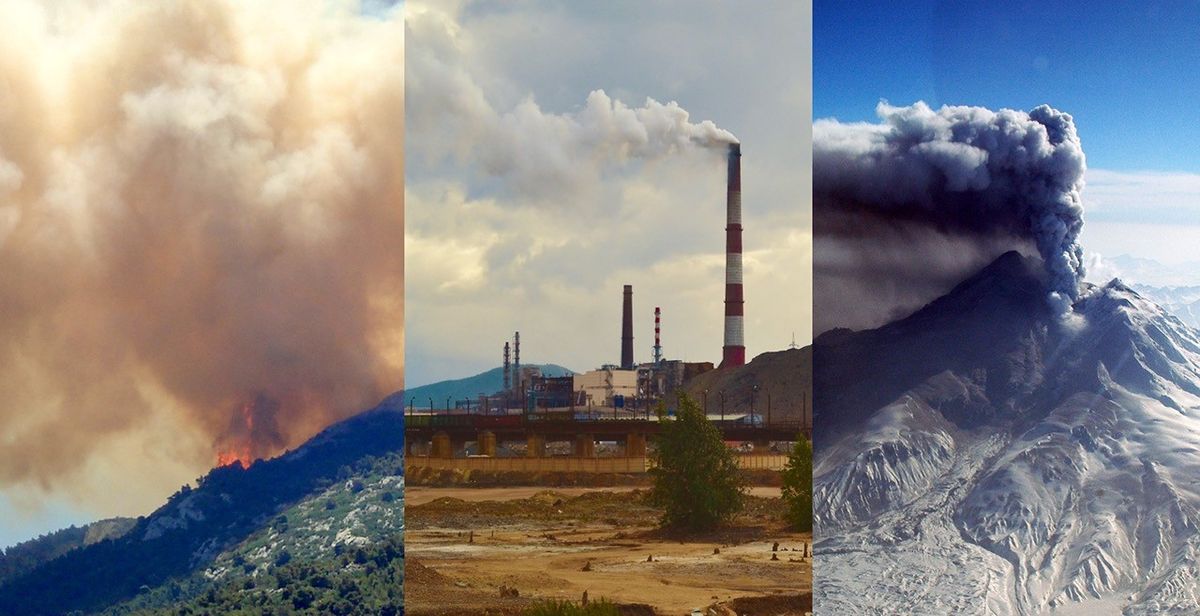
In many regional climate models, aerosol properties are prescribed using fixed climatologies. While computationally efficient, this means aerosols respond only in one direction: they influence weather and climate, but changing meteorological conditions do not affect aerosol concentrations or makeup. As a result, important feedbacks between aerosols, radiation, clouds and extreme weather are either missing or overly-simplified.
This PhD will explore whether modern machine learning can overcome this long-standing limitation. Rather than replacing the climate model, the project will learn computationally efficient representations of aerosol processes from state-of-the-art physical models and embed them directly within the UK Met Office regional climate model.
The project will investigate two complementary challenges. First, machine learning will be used to predict aerosol mixing state using detailed single-particle aerosol simulations. Mixing state strongly controls how particles scatter and absorb sunlight, yet is far too expensive to calculate routinely in regional climate models. Second, machine learning will emulate the microphysical processes that explicitly predict the evolution of particle number, size and chemical composition. Together these approaches will provide realistic, physically consistent aerosol properties at a computational cost close to that of today’s simple climatological prescriptions.
The approach will combine atmospheric physics, applied mathematics and artificial intelligence to develop new machine learning architectures, evaluate their physical realism, and integrate them into an operational climate model. The resulting framework will be tested to determine how improved aerosol representations influence simulations of clouds, radiation and high-impact weather events.
This project offers a unique opportunity to work at the intersection of climate science and AI. Students will gain expertise in numerical modelling, statistical learning, high-performance computing and Earth system science while contributing directly to the development of next-generation regional climate models. The research aligns closely with the UK Met Office strategy of accelerating scientific advances through machine learning and has the potential to transform how aerosol processes are represented in operational weather and climate prediction.
Our experience shows that motivated STEM student with a genuine interest in climate modelling can rapidly develop the skills needed to excel in this field of research. Although the approach draws on advanced methods in data science and machine learning, students typically find that with guidance and curiosity they quickly acquire the necessary expertise to make important insights and make meaningful contributions to understanding how aerosols and clouds shape our future climate. If you’re eager to push the boundaries of knowledge, whilst acquiring highly transferable skills, reach out to our group members to find out more.
Further reading:
https://doi.org/10.5194/acp-26-2293-2026
https://doi.org/10.1029/2018RG000615
https://doi.org/10.1029/2023MS003889