
YES-27-A-22: Observationally constrained aerosol-cloud-fog interactions to improve predictions
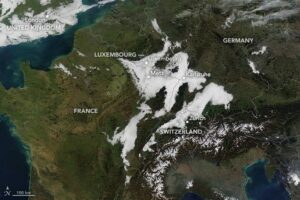
Fog and low visibility pose a serious hazard for aviation and road transport yet accurately forecasting them remains a challenge due to the small scale nature of the phenomena and the subtle interaction of dynamics, thermodynamics, radiation and microphysics in determining the formation and development of the fog. Aerosols are one key part of this puzzle for a number of reasons. Aerosols provide the cloud condensation nuclei on which water condenses to form cloud droplets. Aerosols therefore play an important role in determining the size and number of cloud droplets, which in turn impacts on fog development and lifetime. Aerosols also directly alter the radiative properties of the atmosphere, for example the radiative heating of black soot could enhance the burn-off of fog. Aerosol haze also contributes to reduced visibility even in the absence of fog and so relating observed visibility to fog formation also requires accounting for aerosol scattering effects. Since fog formation typically occurs in low wind and stable conditions, fog can be localised and highly heterogeneous, requiring high resolution models to accurately capture this variability. Advances in sub-km modelling, alongside new model capability to represent aerosol chemistry (UKCA, or the simplified double moment SOL/INSOL scheme for operational use), aerosol-cloud microphysics (CASIM) and improved visibility diagnostics (VERA) now offer the opportunity to study the role of aerosol in fog formation and development in unprecedented detail and to understand how changes in aerosol contribute to changes in fog and low visibility.
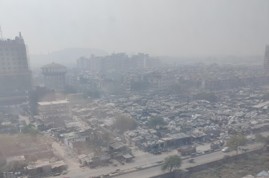
This project will look at cases of fog in both the UK and India. Compared to the UK, India offers a contrasting environment, with very high aerosol loads and (unusually globally) a trend of increasing rather than decreasing fog occurrence in recent decades. Contrasting these two environments will help disentangle the importance of the different ways in which aerosols contribute to fog. Observations from the Met Office led LANFEX field campaign in the UK and WIFEX campaign in N India (led by collaborators at IITM) are available to evaluate and constrain the model simulations. Key questions to address could include
- How well does SOL/INSOL coupled with CASIM capture the key aerosol processes in fog episodes?
- To what extent do changes in aerosol contribute to changes in visibility and is this due to changes in haze or fog?
- Is there a tipping point, beyond which increased aerosol leads to a reduction in fog formation? How does this depend on aerosol and environmental properties?
- How important is the radiative impact of black soot on fog formation and dissipation?
The project has been selected as a potential Met Office CASE project with Angela Mynard as industry supervisor. Specialist support in running the MetUM on Monsoon will be provided through the Met Office and the student would have the opportunity to spend time at the Met Office as part of their PhD.
Further reading
Price et al (2018). LANFEX: A Field and Modeling Study to Improve Our Understanding and Forecasting of Radiation Fog. Bull Am Meteorol Soc 99, 2061-2077.
Smith et al (2023). Fog trends in India: Relationships to fog type and western disturbances. Int J. Clim 43, 818-836.