
YES-27-C-03: An improved understanding of peroxy radicals and their impact on climatically relevant species in the tropical marine boundary layer
A large fraction (~70 %) of the Earth’s surface is covered by oceans and, as such, the production and destruction of climatically relevant species such as ozone, secondary organic aerosols (SOA) and methane through the atmospheric processing of trace gases in these regions can have a significant influence on the Earth’s climate and radiative balance. The remote tropical marine boundary layer (MBL) is characterised by low anthropogenic emissions, high solar radiation and high humidity and, consequently is a region where the main atmospheric oxidant, OH, is present at high concentrations [1]. A major source of peroxy radicals (RO2) in the remote MBL is from the oxidation of methane by OH (~25 % of CH4 is oxidised by OH in the tropical MBL [2]), which leads to the formation of the smallest and most abundant organic RO2, methyl peroxy (CH3O2). Recent fieldwork conducted at the Cabo Verde Atmospheric Observatory (CVAO) and subsequent modelling studies have highlighted that halogen oxides, IO and BrO, generated in the atmosphere following oceanic emissions of halocarbons and inorganic halogen gases, may act as a significant sink for CH3O2 radicals. CH3O2 radicals mediate the concentration of the greenhouse gas, ozone, that is produced through the reaction of RO2 with NO. It’s abundance also controls the concentration formaldehyde and of methyl hydroperoxide (CH3OOH), both of which can recycle HOx and the latter acts as an oxidising species of S(IV) in clouds promoting sulphate formation. The presence of oceanic VOCs, including long-chain aldehydes, emitted from the sea surface microlayer can lead to the production of more complex RO2 species which can be rapidly oxidised forming highly oxygenated molecules that are precursors SOA and which influence cloud formation and the radiative budget.
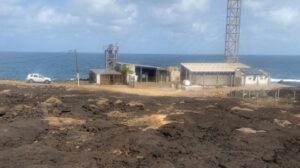
The sum of RO2 radicals has previously been measured at CVAO using the ROxLIF technique [3], but to fully address the impact of RO2 radicals on background ozone levels and SOA production some speciation of RO2 is required. In the laboratory, we have shown the feasibility to selectively detect CH3O2 [4] by conversion to the methoxy radical, CH3O, using excess NO and subsequent detection using laser-induced fluorescence (LIF) at 298 nm, probing the A2A1 (n’3 = 3) ¬ X2E (n”3 = 0) transition. This PhD project will build on these laboratory capabilities and develop a CH3O2 field instrument that will be deployed at the CVAO during a recently funded field project, TROPOX, which aims to determine the current oxidizing capacity in the tropics and how this impacts the concentrations of climate-relevant pollutants. Co-ordinated measurements of CH3O2 and the sum of RO2, via ROxLIF will quantify the non-CH3O2 RO2 radicals present and provide insights into the fraction of RO2 radicals that can act as SOA precursors. Whilst the selective measurement of CH3O2 combined with modelling activities will help to confirm the interaction between CH3O2 and halogen oxides and how these reactions modify background ozone levels.
Specifically in this project you will:
- Help to develop field instrumentation to selectively detect CH3O2
- Participate in the field observations, operating the Leeds LIF instruments to determine the sum of RO2, CH3O2 and non-CH3O2 concentrations at the CVAO in the tropical MBL.
- Develop a box model based on the Master Chemical Mechanism and constrained to the field observations to model RO2 to assess i) the impact of halogen oxides on CH3O2 concentrations and ozone ii) the role of complex RO2 species as precursors to SOA.
[1] Whalley et al. Atmospheric Chemistry and Physics, 2010, 10: https://doi.org/10.5194/acp-10-1555-2010
[2] Bloss et al. Faraday Discussions, 2005, 130: https://doi.org/10.1039/b419090d
[3] Fuchs et al. Review of Scientific Instruments, 2008, 79: https://doi.org/10.1063/1.2968712
[4] Onel et al. Atmospheric Measurement Techniques, 2017, 10: https://doi.org/10.5194/amt-10-3985-2017