
YES-27-D-15: Geomorphology and architecture of siliciclastic vs. volcaniclastic deep-water channels
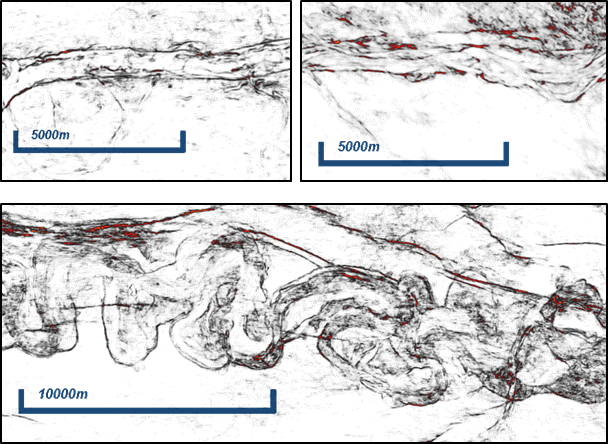
Summary: Submarine channels are prevalent across the continental slopes of Earth and are the most important conduits for sediment transfer to the deep-sea. Both on the modern seafloor, in the rock record at outcrop, and in the subsurface submarine channel systems are seen to form intricate networks of incisional and/or aggradational, often levee bound, channel complexes. Submarine channels are observed to form in every tectonic setting and are fed from terrestrial hinterlands or from oceanic volcanic centres. The primary objective of this project is to compare and contrast the geomorphology and resulting stratigraphic architecture of deep-marine channels developed in volcaniclastic and siliciclastic sedimentary systems.
This project will help develop our fundamental understanding of how deep-sea channels behave with different types and volumes of sediment, potentially decoupled from sea-level drivers, and also develop an applied understanding of the likely fill and stratigraphic properties of channel complexes imaged in the subsurface, i.e., if they may form good reservoirs for carbon capture and storage (CCS) or present significant geohazards. This project will benefit from access to an industrial subsurface dataset (including 3D seismic data, well logs, and core) across an area with numerous deep-marine channel complexes from offshore New Zealand as well as a seafloor dataset from the Tyrrhenian Sea (including bathymetry, CHIRP and core data); fieldwork on volcaniclastic channel fills is possible and the programme may also benefit from access to the large TRG database on submarine channel properties, but is designed to be flexible, and can be adapted to the particular interests of the student.
Aim and objectives: The primary aim of this project is to analyse a number of examples of siliciclastic and volcaniclastic deep-water channels that occur in the same basin(s), i.e., have similar bounding conditions, in order to build depositional and architectural models for said channel types. In addition, the research will involve development and employment of the Deep-Marine Architecture Knowledge Store (DMAKS), a relational database designed and populated by members of TRG at Leeds. Collected data will be used to address research questions (directly as part of this project; see below), but also more widely within the research group to inform modelling of subsurface reservoirs and process-based experimental and numerical modelling of submarine channels. Both fundamental and applied research themes can be investigated as part of the project, and these may include, but are not limited to, any of the following topics and related research questions.
- What differences are there between the morphology and architecture of siliciclastic and volcaniclastic deep-water channels? Although siliciclastic channel forms and resulting stratigraphic architecture have been heavily studied (e.g., Mayall and Stewart, 2000; Janocko et al., 2013; Peakall and Sumner, 2015), their volcaniclastic equivalents have not, particularly in the subsurface (Figure 1). Can geomorphology (planform and cross-sectional) and architecture of the various channel types help us to resolve their formative processes and enable a classification of the channel type and architecture based on their source and sediment type? What can the timing and cyclicity of volcaniclastic channels tell us about generic deep-water channel development, particularly in a setting decoupled from traditional sequence stratigraphic models? What is the anticipated length, size and architectural complexity of the various channel types under the same bounding conditions? To what degree do siliciclastic and volcaniclastic channels display commonalities? What key criteria can be established to help differentiate channel types in the subsurface?
- Does variability in sediment source and type influence flow processes and CCS reservoir properties? In the absence of terrigenous sediment supply can volcaniclastic systems provide significant quantities of sediment to infill channels? What are the rock properties of volcaniclastic channel fills? Does the mineralogy, diagenesis and potential porosity and permeability differ significantly in the aforementioned channel types? Do volcaniclastic turbidite systems interact with mass-transport deposits in ways similar to their siliciclastic counterparts? Ultimately, do volcaniclastic channel fills present viable reservoirs for initiatives such as carbon capture and underground storage?
- Can we improve the application of analogue data for subsurface channel studies? Can this study help provide data for modelling of channelized deep-marine successions in the subsurface? Can we improve on the population of reservoir modelling workflows in volcaniclastic settings? What geological factors should we consider when selecting analogues for channelized volcaniclastic subsurface deposits?
Methodology: Three principal methods shall be applied to answer the above questions:
- The preservation potential, resulting stratigraphic architecture, spatiotemporal evolution, heterogeneity and reservoir properties of volcaniclastic channel complexes will be studied with large (>15,000 km2) industry 3D seismic datasets, well logs, cuttings and core analysis and interpretation from the Taranaki Basin, offshore New Zealand (Figure 2).
- High resolution bathymetry, CHIRP data and core samples from the Tyrrhenian Sea will be used to classify the geomorphology of modern volcanically sourced submarine channels (Figure 1). This will provide insights to seafloor elements of active channels, flow processes, sediment transport capacity, sediment type and potential distribution.
- A comparative metadata study of modern submarine channels and ancient channel fills in volcanic provinces utilising data from published works. The data will be organised and stored in a relational database (DMAKS) and it will provide analogues for the study datasets. This will involve evaluating hierarchy of channel elements and integrating high-resolution modern bathymetry and 3D seismic volumes with outcrop-derived studies.
- Potential exists for fieldwork in New Zealand, Mexico, or the UK to characterise the detail and lateral relationships of lithofacies and stratigraphic architecture of deep-water volcaniclastic systems.
References:
Gamberi, F. and Marani, M. (2007). Downstream evolution of the Stromboli Slope Valley (southeastern Tyrrhenian Sea). Marine Geology 243: 180-199.
Janocko, M., Nemec, W., Henriksen, S. and Warchol, M. (2013). The diversity of deep-water sinuous channel belts and slope valley-fill complexes. Marine and Petroleum Geology 41: 7-34.
Mayall, M. and Stewart, I. (2000). The architecture of turbidite slope channels. In: GCSSEPM Foundation 20th Annual Research Conference, Deep-Water Reservoirs of the World. 578-586.
Peakall, J. and Sumner, E. J. (2015). Submarine channel flow processes and deposits: A process-product perspective. Geomorphology 244: 95-120.
Further Information: For more information about this project and related TRG activities contact:
Adam McArthur [email protected], http://trg.leeds.ac.uk/