
YES-27-G-14: Exploring the Thermal Dynamics of Himalayan Proglacial Lakes
Exploring the Thermal Dynamics of Himalayan Proglacial Lakes
Project background
This project will seek to improve understanding of the thermal characteristics, circulation processes and heat storage capacity of Himalayan proglacial lakes. In doing so, it will investigate how thermal processes govern glacier-lake interactions and the role that lakes play in regulating glacier melt and mountain hydrological systems. The outcomes will provide new insights into how lake thermal characteristics vary both spatially and temporally, identify the environmental controls governing heat storage and redistribution, and quantify the extent to which stored thermal energy is available to drive glacier melt.
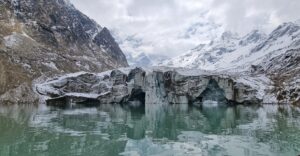
Figure 1: The calving face of Thulagi Glacier, which is a possible site for field investigation
Proglacial lakes are becoming increasingly common across the Himalaya as glacier retreat accelerates in response to a warming climate (Figure 1). These lakes influence downstream water resources, glacier mass loss, local climate and natural hazards, yet their thermal behaviour remains poorly understood. In particular, there is limited understanding of how heat is stored and distributed within these lakes, how thermal energy is transferred to glacier termini, and the extent to which lakes act as thermal reservoirs that enhance glacier retreat. Existing studies have mostly focused on a small number of sites, meaning that the regional variability of lake thermal regimes and the processes controlling them remain unclear.
Extensive satellite archives, coupled with modern field monitoring techniques and environmental modelling approaches, provide new opportunities to investigate these questions across a range of spatial and temporal scales. Depending on the interests and skills of the student, the focus of the work could be on thermal and/or radar remote sensing, field-based lake monitoring, sensor design and development, surface energy balance modelling, or machine-learning approaches for identifying thermal controls across large lake populations.
Aims and objectives
This project will use a mixed-method approach to characterise the thermal dynamics of Himalayan proglacial lakes. The project may include some of the following objectives:
- Develop a multi-decadal assessment of proglacial lake surface temperatures across the Himalaya using satellite thermal imagery.
- Identify the environmental controls on lake thermal regimes, including lake size, elevation, glacier contact, debris cover and catchment characteristics.
- Quantify spatial and temporal patterns of temperature variability within individual proglacial lakes using field-based temperature measurements and thermal imaging.
- Investigate thermal gradients and circulation processes close to glacier termini and assess their influence on glacier-lake interactions.
- Identify and characterise the influence of meltwater inflows and subaqueous discharge on lake thermal structure.
- Quantify lake heat budgets and determine the dominant sources, pathways and sinks of thermal energy.
- Assess the extent to which Himalayan proglacial lakes act as thermal reservoirs and evaluate the implications for glacier melt and hydrological change.
- Develop process-based or statistical models that explain variations in thermal behaviour between different lake systems.
The project will have access to a wide range of satellite datasets, including the Landsat thermal archive and other optical and radar observations, together with field datasets collected through ongoing research activities in Nepal. These include meteorological observations, hydrological measurements and lake temperature records from glacier-fed lake systems. The project may involve fieldwork in the Himalaya, including deployment of temperature sensors, thermal imaging surveys and lake monitoring activities, depending on the interests of the researcher and the final direction of the study.
Training and supervision
The student will benefit from an interdisciplinary supervisory team with expertise spanning glaciology, hydrology, remote sensing, limnology and environmental modelling. This breadth of expertise will provide opportunities to develop a diverse skillset encompassing satellite data analysis, field-based environmental monitoring, numerical modelling and the interpretation of cryosphere-hydrology interactions. The project will be affiliated with the recently funded NERC PeakFlow project, providing access to established field logistics, complementary datasets and a wider network of collaborating researchers working on glacier-lake systems in the Himalaya. The student will also benefit from the vibrant research environment within the School of Geography at Leeds, including activities within the River Basins research cluster, our informal postgraduate group Ice Club, and water@leeds, all of which provide regular opportunities for training, networking, seminar participation and interdisciplinary collaboration.