
YES-27-Y-02: Characterising Urban Ultrafine Particle Exposure in a Decarbonising World
Characterising Urban Ultrafine Particle Exposure in a Decarbonising World
Ultrafine particles (UFPs) are airborne particles with diameters ≤ 100 nm. They pose greater health risks than regulated fine particulate matter (PM2.5) due to their smaller size and ability to enter the body through the lungs more easily. UFPs also have important effects on the climate, by altering cloud microphysics and radiative forcing. UFPs exhibit extreme spatial variability, making the frequency and magnitude of exposure events highly uncertain. There is an urgent need to generate robust observational evidence on the distribution, behaviour and origin of UFP sources across urban environments. Currently, there are limited measurements of UFP in the UK that are required to provide insights into the sources and processing of UFP in the atmosphere.
Primary UFPs are emitted directly from combustion processes. Sources include transportation (road vehicles, aviation and shipping), industrial processes, and domestic natural gas combustion. There is growing public health concern over emissions from aircraft engines during operations such as taxiing and takeoff, driven by the proximity of major airports to residential areas. While the World Health Organization (WHO) does not set quantitative limit values for UFPs due to insufficient data – issuing qualitative good practice statements instead – regulatory frameworks are advancing. The imminent Euro 7 standards extend PN limits down from 23 nm to 10 nm for road vehicles and the International Civil Aviation Organization standards impose non-volatile PN limits on modern aircraft landing and takeoff to mitigate localised exposure.
Beyond direct emissions, a topic of increasing concern is secondary UFPs. These form in the atmosphere via new particle formation (NPF), where precursor gases react to create stable molecular clusters. Paradoxically, recent air quality successes in reducing mass concentrations (PM2.5) have lowered the ‘condensation sink’, creating cleaner atmospheric conditions that can potentially favour secondary UFP formation. Furthermore, emerging net zero technologies, such as amine-based carbon capture and storage (CCS) and ammonia as a future transport fuel, risk introducing localised chemical precursors that further accelerate NPF.
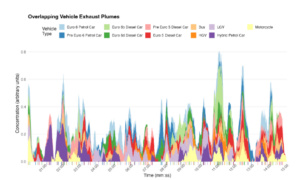
Figure 1 Our group has pioneered new measurement approaches and data analysis techniques to quantify the impacts of complex emission sources (Farren et al., 2024, 2025, Wilson et al., 2024, 2025).
This project aims to significantly improve the understanding of the factors influencing exposure to UFPs in cities, and to build crucial evidence to inform future UFP and air quality projections as cities transition to carbon neutrality.
Main research tasks:
- Couple fast response, high resolution particle number instrumentation to the York mobile laboratory.
- Conduct a comprehensive literature survey on current and emerging UFP exposure threats.
- Quantify specific UFP sources using plume transect sampling, mobile measurements, and dispersion modelling.
- Map urban spatial variability and use multipollutant datasets to identify key atmospheric drivers of secondary UFP formation.
The student will have the opportunity to work closely with industrial partners and academic institutions, including Cambustion and Graz University of Technology, who are world leading experts in particle number measurement technologies. Extensive training will be provided on advanced analytical instrumentation and the York mobile laboratory, providing the student with the foundational knowledge for targeted field deployments in the UK and internationally to address critical scientific evidence gaps. This research leverages existing work at the Wolfson Atmospheric Chemistry Laboratories, where pioneering techniques are being developed to measure important UFP precursors such as amines and ammonia.
Comprehensive training will also be provided on data analysis using the R programming language, which the group has leading expertise in. The research group has a strong track record of producing high profile publications, achieved through innovative experiment design and the development of new data analysis approaches. The candidate will complete their PhD equipped with highly sought after analytical and observational skills suited for leading roles across academia, government, and industry.
Relevant and recent publications
Farren, N.J, Knoll, M., Bergmann, A., Wagner, R.L., Shaw, M.D., Wilson, S., Bernard, Y. and D.C. Carslaw (2025). Highly disaggregated particulate and gaseous vehicle emission factors and ambient concentration apportionment using a plume regression technique Environmental Science & Technology, Vol. 59, Issue 23, 11698–11707 https://doi.org/10.1021/acs.est.5c05015.
Wilson, D., Farren, N.J., Bernard, Y., Shaw, M.D., Lee, K., Crowe, M., Lee, J.D. and D.C. Carslaw (2025). Influence of Vehicle Design on Near-Road Concentrations of Traffic-Related Air Pollutants. Environmental Science & Technology Air, Vol. 2, Issue 6, 1089-1098. https://doi.org/10.1021/acsestair.5c00059.
Wilson, S., Farren, N. J., Wilde, S. E., Wagner, R. L., Lee, J. D., Padilla, L. E., Slater, G., Peters, D., & Carslaw, D. C. (2024). Mobile monitoring reveals the importance of non-vehicular particulate matter sources in London. Environmental Science: Processes & Impacts. https://doi.org/10.1039/D4EM00552J
Farren, N.J., Wilson, S., Bernard, Y., Shaw, M.D., Lee, K, Crowe, M. and D.C. Carslaw (2024). An ambient measurement technique for vehicle emission quantification and concentration source apportionment, Environmental Science & Technology, 58, 20091−20100, https://pubs.acs.org/doi/10.1021/acs.est.4c07907.