
Project Description:
Glacier collapse events, where a large section of ice dramatically breaks away from a glacier, have the potential to be catastrophic hazards in the mountain
cryosphere. Most notably in recent years, a large ice avalanche in Uttarakhand, India killed more than 200 people in February 2021, and a detachment from
the Marmolada glacier in Italy killed 11 people in July 2022 . This project will seek to develop a new set of criteria towards understanding the likelihood of a
glacier being susceptible to collapse by studying the morphology and change of ice surface features, such as concentric crevasses. The work will focus
primarily on remote sensing image analyses to identify such features and their change through time, combined with using GIS to develop the metrics that
may improve understanding of the contexts in which they are most likely to form. There is opportunity for fieldwork, depending on funding, to ground-truth
some of the features at a long-term monitoring site in the Swiss Alps. The successful student will also join the School’s ‘Ice Club’, which is a support network
of postgraduate and postdoctoral researchers, with the opportunity to present at one of the regular meetings arranged by this group.
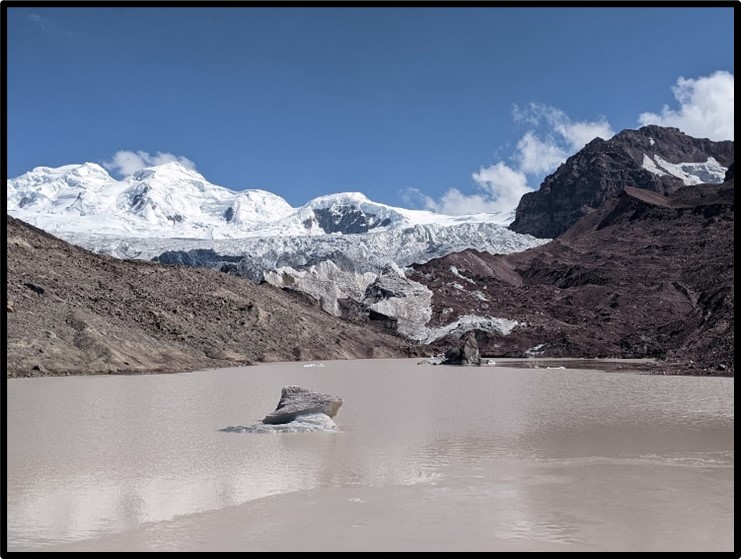
Concentric crevasses are prevalent across glaciers of the Alps and are indicative of terminus collapse and general glacier instability, but there has thus far
been no in-depth investigation into their dominant locations, the processes through which they form, and their role in driving glacier instability. The project
will predominantly focus on answering the first two of these questions, through remote sensing and GIS analyses. The student will first use both historical and
contemporary imagery to map their locations, and their evolution, focussing on the recent (10 year) past. The second major task will be to evaluate whether
those data correlate with morphological parameters such as elevation, aspect and slope. Skills development will focus on coding, satellite image analysis and
GIS literacy, with sufficient flexibility in the plan for the student to focus on addressing any existing skills gaps without compromising the project outputs.
Pre-requisites: N/A
Supervisory Team: Duncan Quincey & Liam Taylor
Contact: [email protected]