Testing the Environmental Stability of Iron Associated Carbon and Geopolymerised Organic Carbon
Developing our understanding of carbon storage and burial in marine sediments is important to support decision making by environmental management organisations and policy makers. It is necessary to know how much carbon is stored and over what timescales, as well as how that carbon will respond to climate warming and anthropogenic disturbance.
Multiple factors related to carbon source, transportation and degradation history, and sediment physical and biogeochemical environment are known to influence carbon burial rates (Burdige, 2007), however proper mechanistic understanding and predictive ability is still lacking.
Recent advances have shown the key importance of sorption and co-precipitation associations between organic carbon compounds and reactive iron mineral surfaces (Fe-OC) (Lalonde et al., 2012; Moore et al., 2023). Those mineral associations have also been shown to catalyse condensation reactions and the production of stable geopolymers (geopolymerised substances, or GPS) which are more likely to become buried in sediment.
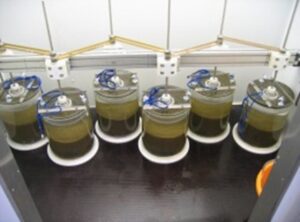
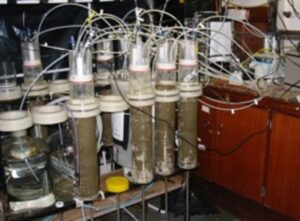
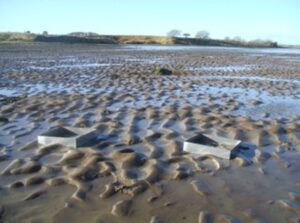
The next step in this field is to broaden our knowledge of iron-associated organic carbon and GPS, and test their biological stability, in natural environmental settings. This project will use a combination of detailed analysis of naturally occurring sediments, with laboratory mesocosm experiments to address the following questions:
• How do the natural occurrence of Fe-OC and GPS vary with physical and biogeochemical setting, and organic carbon source and degradation history?
• How rapidly does GPS degrade in a natural sedimentary setting?
• To what extent are Fe-OC and GPS available to and utilised by sedimentary microbial communities and faunal groups?
You will join a vibrant research group with world-leading expertise in marine carbon cycling, marine sediment biogeochemistry and both experimental and analytical approaches to measuring and characterising organic carbon.
You will receive specialist scientific training in state-of-the-art experimental and analytical techniques and modelling approaches, many of which have been developed by your supervisory team at Leeds. In addition you will be trained in a wide variety of key transferable skills within the YES DTN, from computer programming and modelling, to media skills and public outreach. You will also be encouraged and supported to present your research at national and international scientific conferences, for example at Goldschmidt, which is the premier international geochemistry conference held in Montreal in 2027.
References
Burdige, D.: Preservation of organic matter in marine sediments: Controls, mechanisms, and an imbalance in sediment organic carbon budgets?, CHEMICAL REVIEWS, 107, 467-485, 10.1021/cr050347q, 2007.
Lalonde, K., Mucci, A., Ouellet, A., and Gélinas, Y.: Preservation of organic matter in sediments promoted by iron, NATURE, 483, 198-200, 10.1038/nature10855, 2012.
Moore, O., Curti, L., Woulds, C., Bradley, J., Babakhani, P., Mills, B., Homoky, W., Xiao, K., Bray, A., Fisher, B., Kazemian, M., Kaulich, B., Dale, A., and Peacock, C.: Long-term organic carbon preservation enhanced by iron and manganese, NATURE, 621, 312-+, 10.1038/s41586-023-06325-9, 2023.