
YES-27-C-02 Direct Measurements of Reactive Atmospheric Species
Atmospheric oxidation chemistry is central to air quality and climate. Ozonolysis reactions, in which ozone initiates the oxidation of unsaturated volatile organic compounds (VOCs) through addition to C=C double bonds, play a significant role in the removal of VOCs from the atmosphere and lead to the production of reactive zwitterionic species known as Criegee intermediates (R2COO). Competition between unimolecular decomposition of Criegee intermediates with collisional stabilisation to form stabilised Criegee intermediates (SCIs) dictates the impact of ozonolysis reactions (Johnson & Marston, 2008; Donahue et al., 2011).
The development of photolytic laboratory sources of SCIs has revealed unexpectedly high reactivity, leading to improvements in our understanding of the atmospheric chemistry of SCIs (for example Welz et al., 2012; Cox et al., 2020; Mir et al., 2020; Robinson et al., 2022; Lade et al., 2024; Lade et al., 2025). However, significant uncertainties in SCI yields from ozonolysis reactions remain, limiting our ability to fully assess their atmospheric impacts. To address this problem, the Leeds group has recently developed the use of UV cavity enhanced absorption spectroscopy (CEAS) to make real-time direct measurements of absolute concentrations of SCIs during ozonolysis reactions in an atmospheric simulation chamber (Onel et al., 2026).
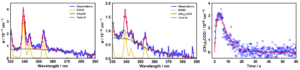
Figure 1: CEAS observations of Criegee intermediates in HIRAC during the ozonolysis of ethene (left panel) and tetramethyl ethene (middle and right panels).
In this project you will combine experimental research at the School of Chemistry in Leeds with training on fundamental metrology and measurement science applied to atmospheric and air quality monitoring at the National Physical Laboratory.
Experiments in Leeds will use laser flash photolysis with time-resolved broadband UV absorption spectroscopy for detailed measurements of SCI reaction kinetics, coupled with chamber measurements in the Highly Instrumented Reactor for Atmospheric Chemistry (HIRAC) using CEAS for the direct determination of SCI yields in ozonolysis reactions. You will make use of the wide range of instruments coupled to HIRAC to support the CEAS measurements, with available techniques including Fourier transform infrared (FT-IR) spectroscopy, laser-induced fluorescence (LIF) spectroscopy, and mass spectrometry (Glowacki et al., 2007). You will also gain experience in the use and development of numerical models of atmospheric chemistry to analyse data obtained in your experiments. You will also have opportunities to develop the CEAS system to measure OH radicals and other species such as glyoxal (CHOCHO) in HIRAC.
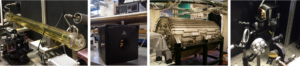
Figure 2: Laboratory and chamber experiments in Leeds.
Your work with the CASE partner at the National Physical Laboratory will focus on the development and application of techniques for the quantitative detection of concentrations of reactive atmospheric species such as VOCs, ammonia and nitrogen oxides, along with hands-on training on a wide array of measurement techniques used in atmospheric and air quality monitoring. You will receive training on the fundamental aspects of metrology (e.g., traceability, calibration, QA/QC, uncertainty calculations, etc.), and these can be applied to your work at NPL and Leeds.
Objectives
At the University of Leeds, you will develop capabilities for real-time direct measurements of reactive species in laboratory experiments and atmospheric simulation chamber studies. Your work will provide a crucial link between photolytic studies of SCI chemistry and previous indirect measurements made via observations of stable products in ozonolysis-based approaches, providing valuable information on yields, kinetics, and mechanisms for assessments of atmospheric composition, air quality, and climate.
At NPL, you will be trained on fundamental aspects of measurement science applied to real-life atmospheric measurements, and be able to work on projects related to the measurements of reactive gases.
The combined approaches at the University of Leeds and NPL will provide novel information of key atmospheric oxidation processes underpinned by sound metrological approaches.
Training
The student will work under the supervision of Professor Daniel Stone and Professor Paul Seakins within the Atmospheric, Planetary, and Theoretical Chemistry group in the School of Chemistry at the University of Leeds. You will work in well-equipped laboratories and be part of an active, thriving and well-funded atmospheric chemistry community. The Leeds group has an internationally leading reputation in atmospheric chemistry for field measurements of atmospheric composition, laboratory studies of chemical kinetics and photochemistry, and the development of numerical models and chemical mechanisms. Activities in these three areas are intimately linked and interdependent, providing significant advantages. You will be supported to attend both national and international conferences, and will receive a training that includes areas such as communication and presentation skills, project management, and data science, in addition to the technical aspects of the project. The PhD will provide a wide range of experience in optical spectroscopy, the use of lasers, vacuum systems, computer controlled data acquisition systems, and methods in numerical modelling. You will also have access to training provided by the National Centre for Atmospheric Science.
At NPL, you will work with Dr Valerio Ferracci and his team in the Air Quality and Aerosol Metrology (AQAM) group. The group specialises in the measurement of air pollutants for both regulatory and research purposes, collaborating with government, industry and academia. You will have access to state-of-the-art dedicated exposure facilities to evaluate a variety of measurement techniques relevant to your project. You will also be enrolled in the NPL Post-Graduate Institute (PGI), with full access to training resources and other PGI activities.
Student profile
You should have an interest in atmospheric chemistry, air quality, climate, and global environmental problems, with a strong background in experimental physical chemistry or similar (e.g. physics, natural sciences, engineering, or environmental science).