
YES-27-G-02: Building Climate-Resilient Landscapes: Ecohydrological Recovery of Peat and Organo-Mineral Soils
Project overview
How quickly can degraded landscapes recover their ability to store water, reduce flooding, and increase resilience to climate extremes?
Healthy soils are fundamental to resilient catchments. By regulating how water moves through landscapes, soil properties influence water storage, groundwater recharge, runoff generation, water table dynamics and sediment and nutrient transport. These hydrological processes underpin many ecosystem services, including flood and drought mitigation, carbon sequestration, biodiversity recovery and water quality protection; climate change is placing growing pressure on these ecosystem services and their ability to mitigate extremes.
Nature-based solutions (NbS) are actions that work with natural processes to deliver benefits for people and nature. Examples include peatland restoration, woodland creation, and changes to grazing management. Soil restoration and management are key components of many NbS, which often seek to improve ecohydrological functioning: the interactions between soils, water, vegetation and climate that regulate how ecosystems operate and respond to environmental change.
Despite growing investment in peatland restoration and other NbS, important questions remain. We still know relatively little about how quickly soil properties change following management interventions. Furthermore, it is unclear how these changes influence ecosystem functioning and whether different soil types recover in different ways.
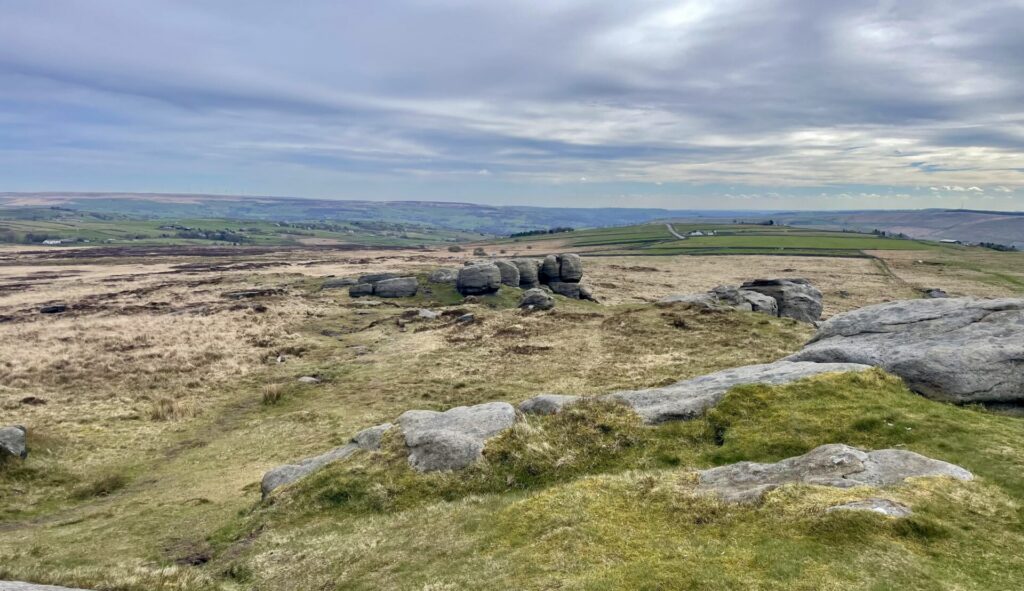
This PhD will investigate the ecohydrological recovery of peat and organo-mineral soils following management change in upland moorlands. Peat soils are highly organic soils formed through the accumulation of partially decomposed plant material under waterlogged conditions. Organo-mineral soils, also known as shallow peaty soils, contain a relatively shallow organic horizon overlying mineral soil or bedrock. While peat soils are often the focus of restoration efforts, organo-mineral soils occupy much larger areas of many UK upland catchments and are comparatively understudied in relation to their hydrological functioning. Understanding how these contrasting soil systems respond to management is essential for predicting the effectiveness of NbS at a landscape scale.
Research opportunities
This project will explore how these contrasting soil types regulate water storage, water-table behaviour and runoff generation. It will also investigate how interactions between soils and vegetation influence ecohydrological processes, and how restoration interventions shape resilience to drought and extreme rainfall under a changing climate.
The successful candidate will have flexibility to design their own project which may include:
- Design and implementation of a Before-After-Control-Intervention (BACI) or Paired Catchment monitoring programme to investigate ecohydrological change in peat and organo-mineral soils.
- Evaluation of how scale, season, climate, land use, vegetation, soil type and antecedent conditions influence restoration outcomes and landscape resilience.
- Development and application of hydrological modelling to evaluate the effectiveness of NbS interventions under current and future conditions.
- Collaboration with landowners, practitioners and other stakeholders to incorporate local knowledge and co-produce impactful research.
- Translating findings into policy and practice through engagement with regional and national initiatives, including the Yorkshire Natural Flood Management (NFM) Community of Practice and national NFM Evidence Directory.
The research will provide evidence to support the design, implementation and evaluation of NbS for climate adaptation, ecosystem recovery and sustainable catchment management.
CASE Partner: Bridestones Rewilded
This PhD will be undertaken in CASE partnership with Bridestones Rewilded, an ambitious landscape recovery initiative restoring Bridestones Moor near Todmorden, Yorkshire. The site includes areas of deep peat and organo-mineral soils and is undergoing nature-based restoration, including gully blocking and conservation grazing. Access to an established environmental monitoring network, active volunteering community and before-after restoration datasets provides a unique opportunity to investigate ecohydrological recovery as restoration unfolds in a real-world setting.
Recommended reading
Berdeni, D. et al. (2021) Assessment of the impact of land use on Welsh organo-mineral soils. Soil Policy Evidence Programme. Report SPEP2020-21/08. https://www.gov.wales/assessment-impact-land-use-organo-mineral-soils
Bond, S., Kirkby, M.J. and Holden, J., 2021. Upland grassland management influences organo‐mineral soil properties and their hydrological function. Ecohydrology, 14(8), p.e2336. https://doi.org/10.1002/eco.2336
Goudarzi, S., Milledge, D., Holden, J., Evans, M., Allott, T., Johnston, A., Shuttleworth, E., Kay, M., Brown, D., Rees, J. and Edokpa, D., 2024. Natural flood management through peatland restoration: catchment‐scale modeling of past and future scenarios in Glossop, UK. Water Resources Research, 60(8), p.e2024WR037320. https://doi.org/10.1029/2024WR037320
Pearson, E. et al. (2025) Working with natural processes: Evidence directory update. In: Foley, J., Heron, E. & Hine, D. (eds.) FRS21232/RR. Bristol: Environment Agency. https://www.gov.uk/flood-and-coastal-erosion-risk-management-research-reports/working-with-natural-processes-to-reduce-flood-risk-2024