
YES-27-G-08: Evidencing natural flood management in lowland wetlands
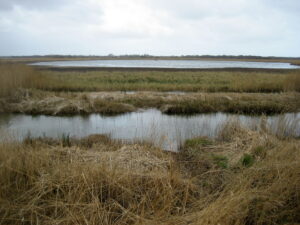
Lowland wetland systems such as those around the Norfolk Broads in eastern England play a role in both fluvial and tidal-influenced flood protection. With climate change, there will be enhanced fluvial and tidal-driven flood risk for such areas in the future. More properties will be at greater risk and so solutions are sought to provide some resilience. Little is known about how flood protection roles in lowland wetlands can be enhanced via nature-based flood management strategies such as online and offline storage systems that may switch on and off under different environmental conditions (e.g. responding quickly to storm surges or fluvial flooding). There is also concern that creation of some flood storage systems may result in local changes in salinity which could have adverse effects on ecology and agricultural productivity.
This project will evaluate the effectiveness of NFM strategies for the Norfolk Broads region with a view to developing evidence and understanding that can support future upscaling in the region and, critically, roll out in other tidal-locked wetland systems.
The research in the project may use a range of approaches including:
- Monitoring water levels, discharge, hydraulic head and salinity across study sites
- Assessing large quantities of data from automated sensors
- Measuring soil permeability, water tables and other soil properties
- Modelling surface and subsurface flows
- Modelling NFM scenarios and their hydrological outcomes
The project will be suitable for a student who is keen for a mix of field, lab, data analysis and modelling work. The student will engage with stakeholders including project partners RSPB and the Norfolk Wildlife Trust, spending time at their sites and with their staff. Students with a background in physical geography, environmental science, engineering hydrology and similar disciplines would be ideal.
Example reading:
Acreman, M. and Holden, J. (2013) How wetlands affect floods. Wetlands 33, 773-786.
Environment Agency (2025) Natural Flood Management evidence https://www.gov.uk/government/publications/natural-flood-management-evidence
Zhu, Q., Klaar, M. Willis, T., Holden, J. (2025) A quantitative review of natural flood management research. WIRES Water, 12, e1765. https://doi.org/10.1002/wat2.1765